|
WHY MAKE A MODEL ? V. Ryan © 2001 - 2011 |
| PDF FILE - CLICK HERE FOR PRINTABLE WORKSHEET |
|
It is always a good idea to make models of your ideas, before deciding on the final design. Models can be computer generated or manufactured by hand, to a scale. This will help you determine whether your idea is going to work or needs modifying. A model allows you to test your solution quickly and cheaply. You could ask your client / customer if the design is what they are looking for? Imagine the time and money that would be wasted, if a car manufacturer designed and manufactured a new car, without showing a model to potential customers and before a production line was setup. If the car was not popular or was found to have faults, hundreds of millions of pounds would be lost. The proportions of the product, its functionality, aesthetics and even materials, can be assessed / evaluated by manufacturing an actual model or by producing a CAD model. A model can be used by a focus group or as part of a survey of potential clients, to discuss their views. |
|
TESTING YOUR DESIGNS |
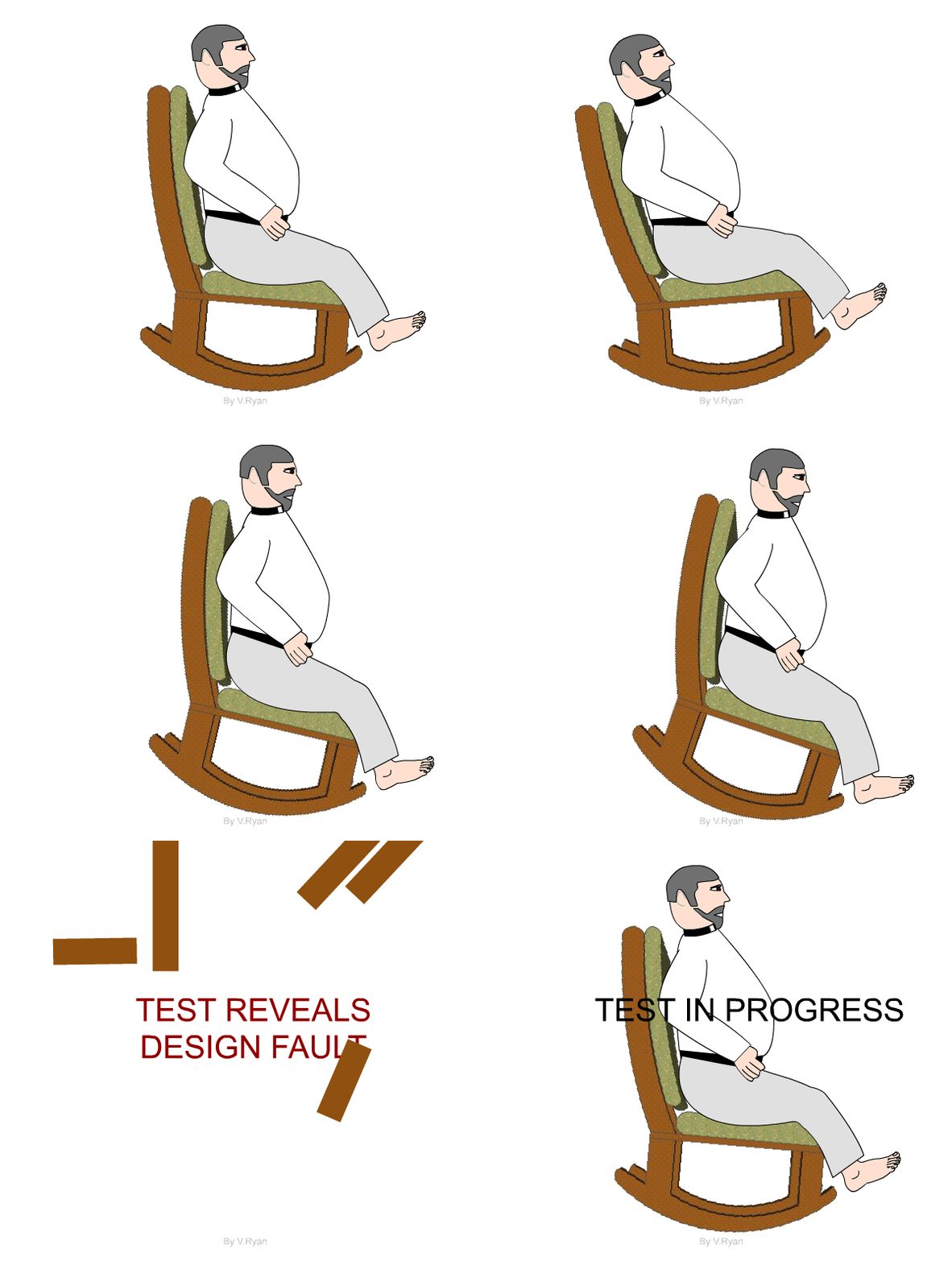
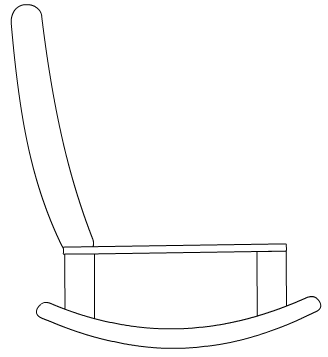
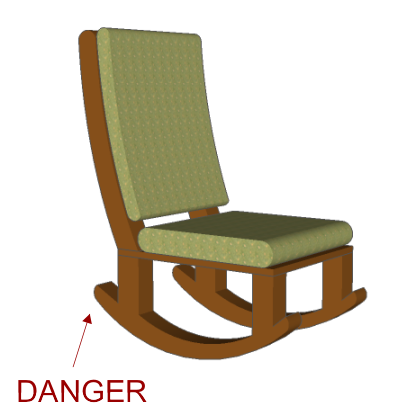
| A Model of a Rocking Chair:
It is just as important for you to make models and test your ideas on your
client / customer. You could make several simple models (perhaps from
card) early in the project and ask potential customers which one they like
best. This could be presented as a questionnaire (see earlier information
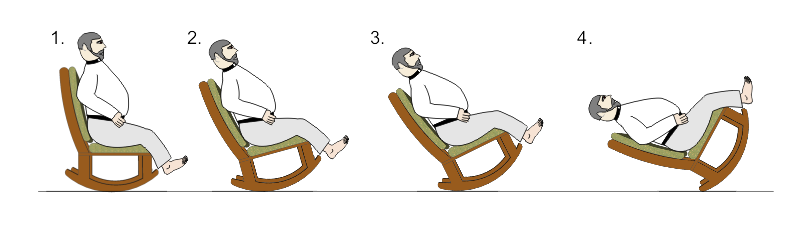
sheet). What will happen if a person leans back in the chair ? What is the advantage of making this model chair before making the full size version ? |
 |
 |