CLICK HERE FOR INDEX PAGE

HOW TO CARRY OUT A QUESTIONNAIRE

V. Ryan © 2001-2005

What is a Questionnaire ?


A very important aspect of research work is a survey or questionnaire. This will show the examiner that you have produced individual research relating directly to your project. A questionnaire is usually composed of one or more questions that are put to a ‘large’ number of people. The results can be collected as a table of results and/or a graph or pictogram. Questionnaire(s) can help you design your product because they may tell you what the market wants. (What people are prepared to buy).

TABLE OF RESULTS

EXAMPLE

ALARM TYPE

No OF PEOPLE

BICYCLE

15

BRIEF CASE

20

DOOR

24

PERSONAL ALARM

5

CAR

7

PICK-POCKET

10

WINDOW

29

TOTAL

100


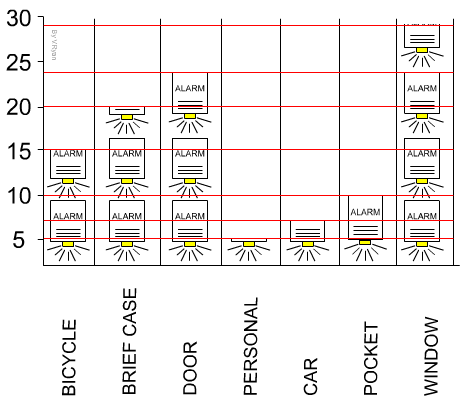
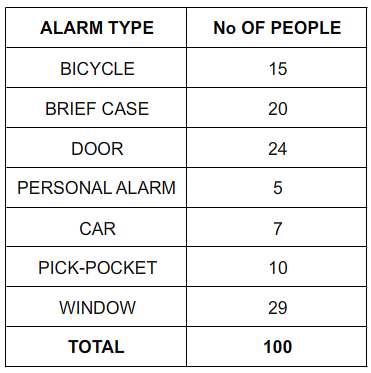
If you are designing an alarm system you need to know what type of alarms people want to buy. You could carry out a survey based on the following question and store the results as a table:

I asked 100 people, which type of alarm are you in most need of?

Bicycle, brief case, door, personal, car, anti pick pocket or window.


The results could first be collected in a table of results (left).

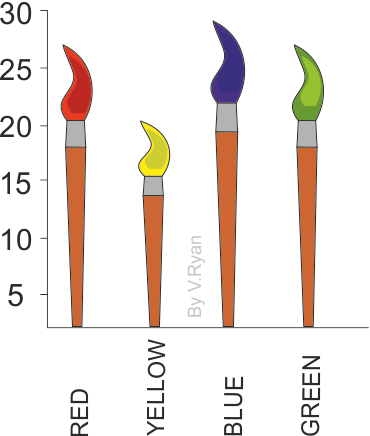
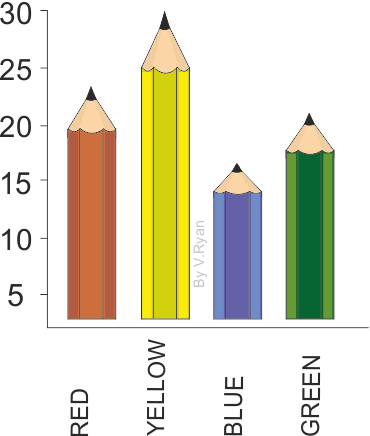
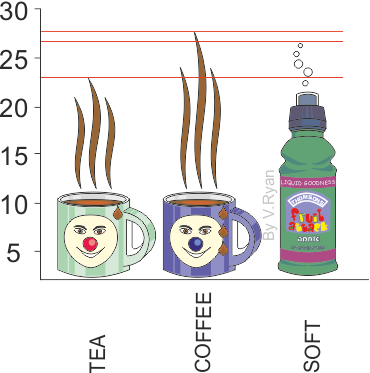
The results can then be graphically presented as a pictogram. These are graphs but based on pictures and they can be built up from pictures of almost any form. Two examples are shown (left and below).

The first could be a pictogram drawn to display the results of a survey to find the most popular colour from a selection of red, yellow, light blue and green.
Pictogram two could be used to show the most popular drink. The graph is composed of three drawings, each representing coffee, tea and soft drinks. The most popular drink is represented by the cup with the highest steam rising from it.
A pictogram can be an interesting visual component of your research work. It gives you the opportunity to show how you can present statistics in an interesting manner. The pictures in the pictogram should reflect the question that has been asked. For example, if you are trying to find the most popular colour of paint, the statistics could be presented as paint brushes.


Carry out a questionnaire for a project of your choice. Select the question(s) you are to ask carefully and decide on the range of people that you are going to approach (teenagers or adults over 20Years of age etc...).

FURTHER INFORMATION
   

The example shown below is a basic example of a questionnaire sheet.
1. At the top of the sheet a clear statement should be made regarding what questions or question has been asked.
2. The target population should be identified. The example sheet shows that teenagers aged 13 to 19 years of age were asked the question. The number of people asked is also stated.
3. Draw a table of results. Consider including a key that states the number of people represented by each. On the example the key is at the top (1 UNIT = FIVE PEOPLE). Alternatively, create a table that has two columns. In one column write the choices and in the other write the number of people who selected each one.
4. Write as many possible choices for your question(s) and shade the appropriate number of boxes or place a tick of cross in each.
5. Draw a pictogram or bar chart opposite the table of results. If you choose to draw a pictogram, use pictures that represent the theme. For example, if the questionnaire is about musical instruments, then musical notes could be used for the pictures. In the pictogram seen opposite, arrows are used to represent each column of figures. However, the pictogram represents alarms, what could be drawn in the place of arrows?
6. Place a scale alongside the pictogram so that the figures can be read easily.
7. If you have difficulty drawing a pictogram produce a bar chart or line graph.
8. Write a summary of your findings at the bottom of the page. This should clearly say what you have learnt from the answers to the questionnaire.

SUGGESTIONS

   
A. Take time when thinking of a question or questions that you intend to ask. Keep questions simple.
B. When writing your questions keep in mind the target population especially the age group concerned.
C. Look at examples of pictograms and tables as these will give you ideas for your page layout.
D. Complete your homework on time. Do not fall behind as you may find it impossible to catch up.
   
LESSON STARTER - QUESTIONNAIRE
   
CLICK HERE FOR SAMPLE QUESTIONNAIRE QUESTIONS AND TARGET MARKETS
   

CLICK HERE FOR EXAMPLE QUESTIONNAIRES

   
CLICK HERE FOR DESIGN PROCESS INDEX PAGE
   
 
Google
 
Web www.technologystudent.com