|
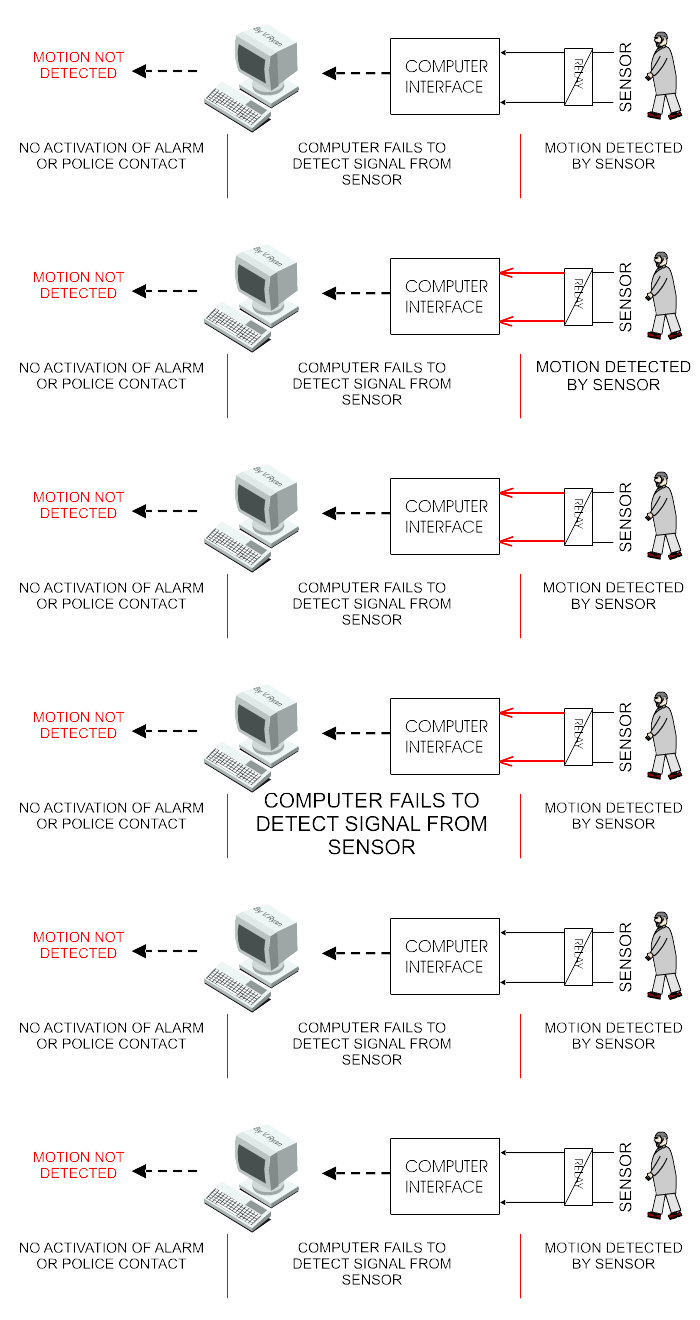
The circuit below is part of a sensor that detects intruders - detects motion. As motion is detected a signal (current) is sent to the controlling computer. The controlling computer automatically activates the alarm, contacts the police and locks internal doors. However, during testing a problem is found. The signal from the senor is too brief as it only last a fraction of a second and it is not detected by the computer. The signal duration/length is not long enough. Consequently potential intruders will not be detected. |
|
|
|
|
|
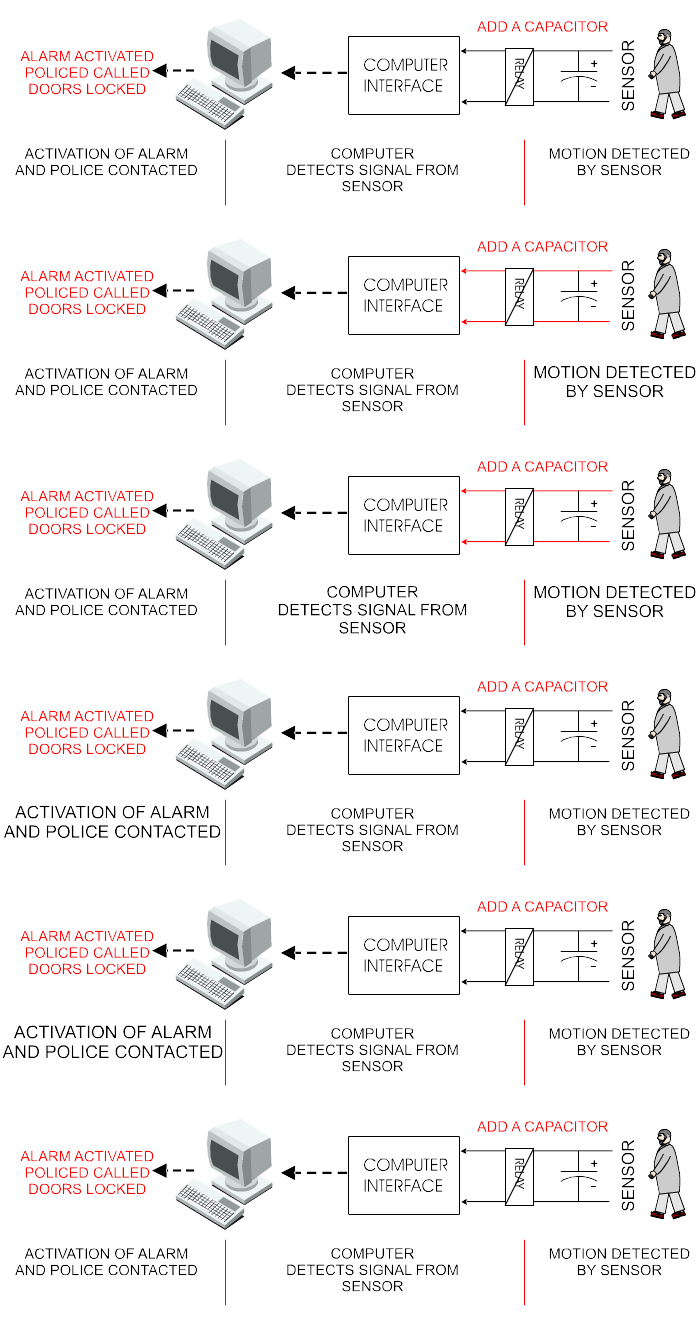
A time delay is the obvious answer and this can be achieved by adding a capacitor in parallel to the relay in the sensor circuit. If the relay is held closed for 0.75 seconds or more the computer program will have time to detect the signal - A capacitor provides the time delay. |
|
|
|
|
| HOW IT WORKS IN DETAIL: | |
|
The capacitor is placed in parallel to the relay and is charged by the current/power supply. When the sensor detects motion the relay energises (is held closed) and the capacitor discharges its current. The discharge from the capacitor ensures that the relay stays energised for approximately 0.75 seconds. This is enough time for the controlling computer to detect the signal from the sensor circuit. |
|
| USING A CAPACITOR AS PART OF A 555 TIMER: Shown below, using Circuit Wizard Software | |
|
|
|
|
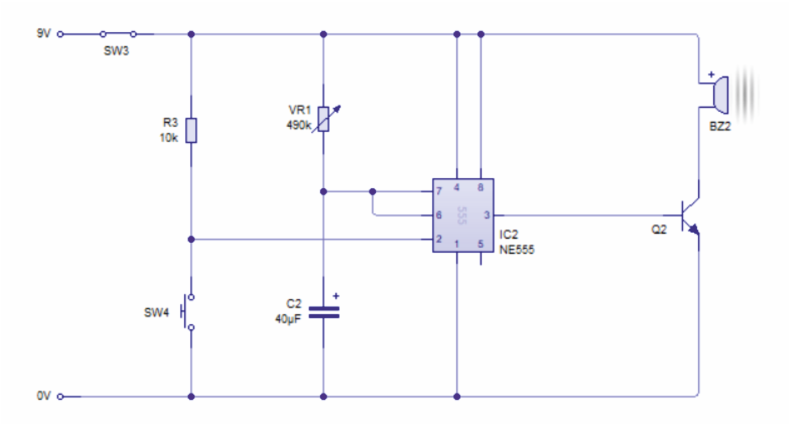
The 555 circuit shown above is more sophisticated than
the circuits shown at the top of the page. It is composed of several components included the
integrated circuit (NE555). When toggle switch is on and the puch sitch pressed, the buzzer sounds for a certain
amount of time. The
combination of setting of the variable resistor andthe capacitor, control the time delay - in
this case the length the buzzer sounds for. If the resistance is reduced using the variable resistor, the time the buzzer sounds is reduced. Increasing the resistance, increases the length of time the buzzer sounds. The variable resistor increases and decreases the electricity stored in the capacitor |
|
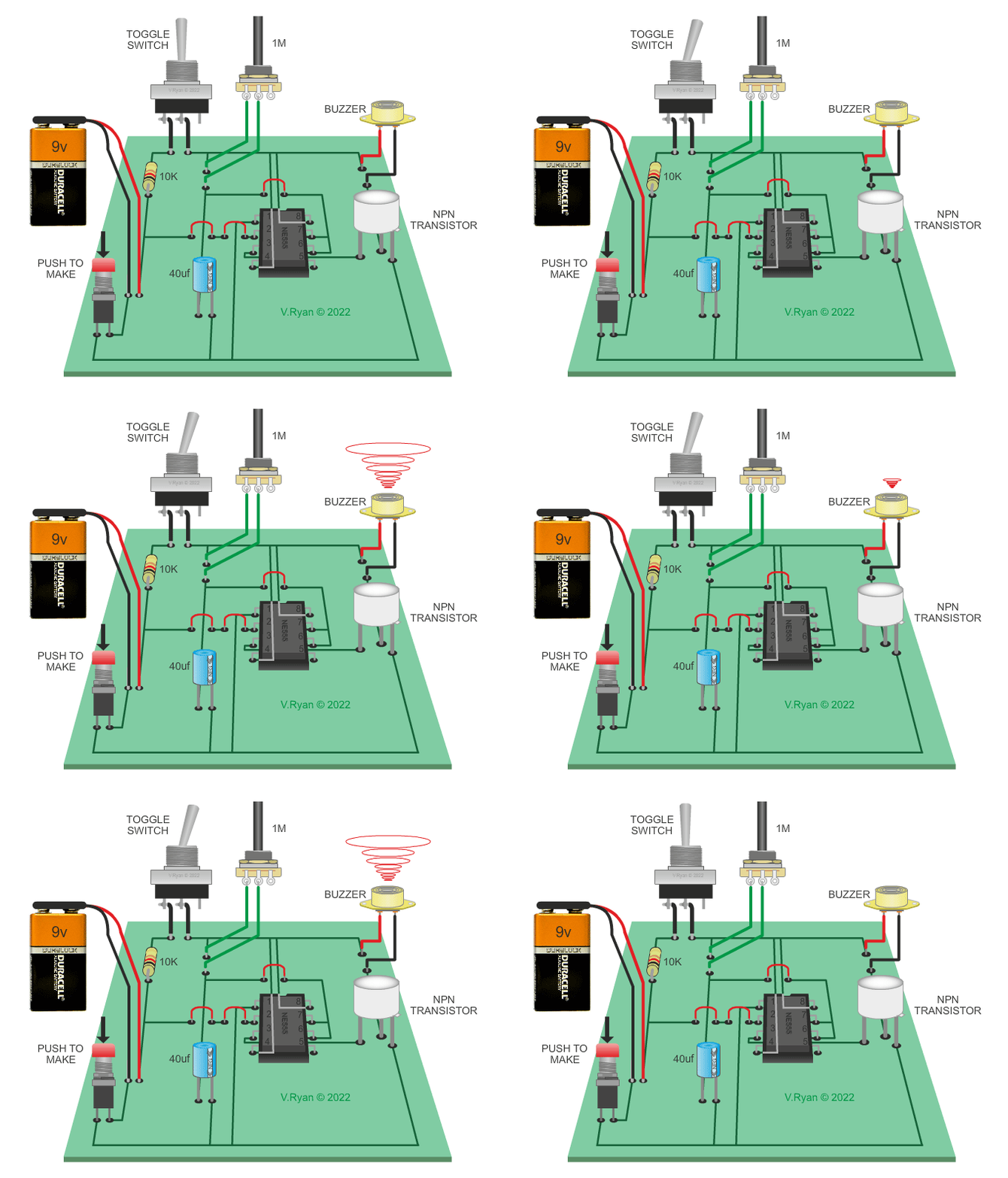
| PICTORIAL REPRESENTATION OF THE NE555 TIMER, SHOWN ABOVE | |
 |
|
| What will happen if the value
of the capacitor is reduced ?
|
|
|
|
|