| |
| CLICK HERE FOR INDEX PAGE |
| |
BACK SAWS - TENON SAWS AND DOVETAIL
SAWS
(Including the Gents Saw) |
| V. Ryan © 2002 - 2023 |
| |
| PDF FILE - CLICK HERE FOR PRINTABLE WORKSHEET |
| |
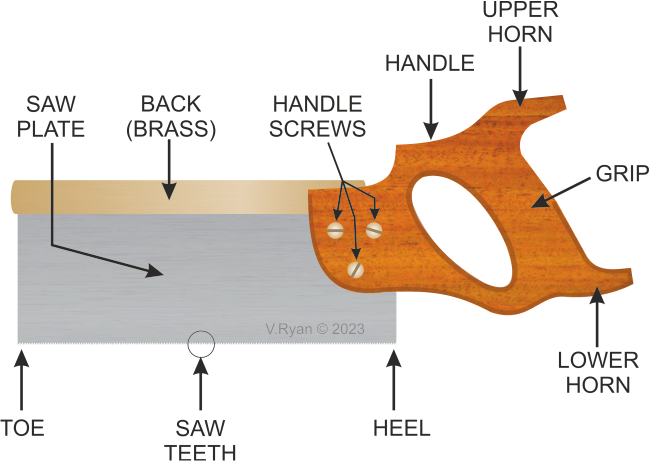
Back Saws get their name from the steel or brass back (labelled on the diagram). The heavy
back gives the saw its weight which is useful when sawing wood. The
weight of the saw along with the forward sawing motion allows the saw to
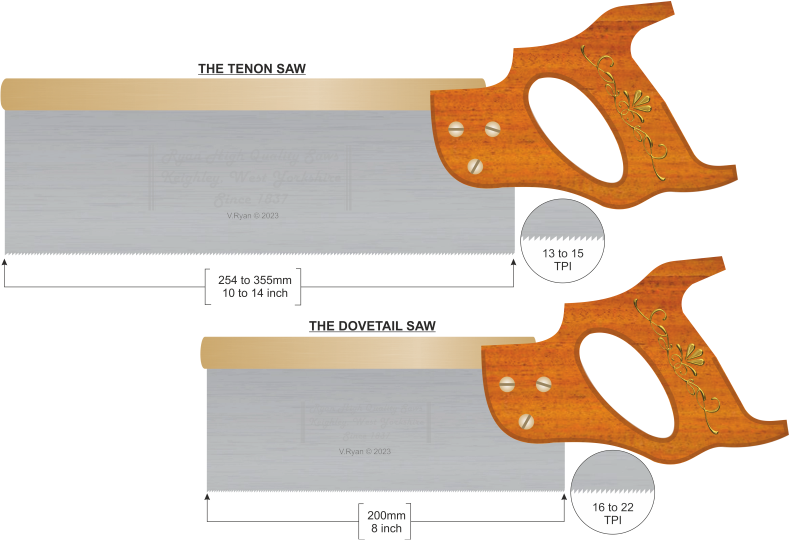
cut through woods relatively easily. The two main types are the tenon saw and the dovetail saw.
TENON SAW : for general sawing and cutting mortise and tenon
joints.
DOVETAIL SAW : for cutting joints such as dovetails |
| |
 |
| |
|
|
| |
| The number of teeth per inch (TPI) is the same as points per inch (PPI). Tenoin saws have more teether per inch than dovetail saws. |
| |
 |
| |
|
|
| |
| HOW THE SAW IS HELD? |
| |
 |
| |
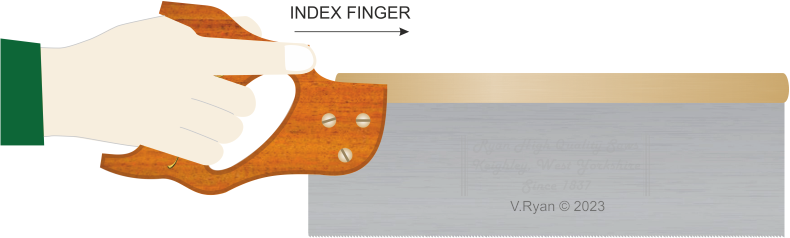
| The saw has to be held in the hand carefully. The
index finger must point in the direction of sawing and it also helps to
support the whole saw as it moves forward. The saw must not move from
side to side or it will jam in the wood making sawing difficult. |
| |
 |
| |
| PROCEDURE FOR USING THE TENON
SAW |
| |
1. The wood to be cut is marked out carefully using a
try square and marking knife (see try-square information sheet).
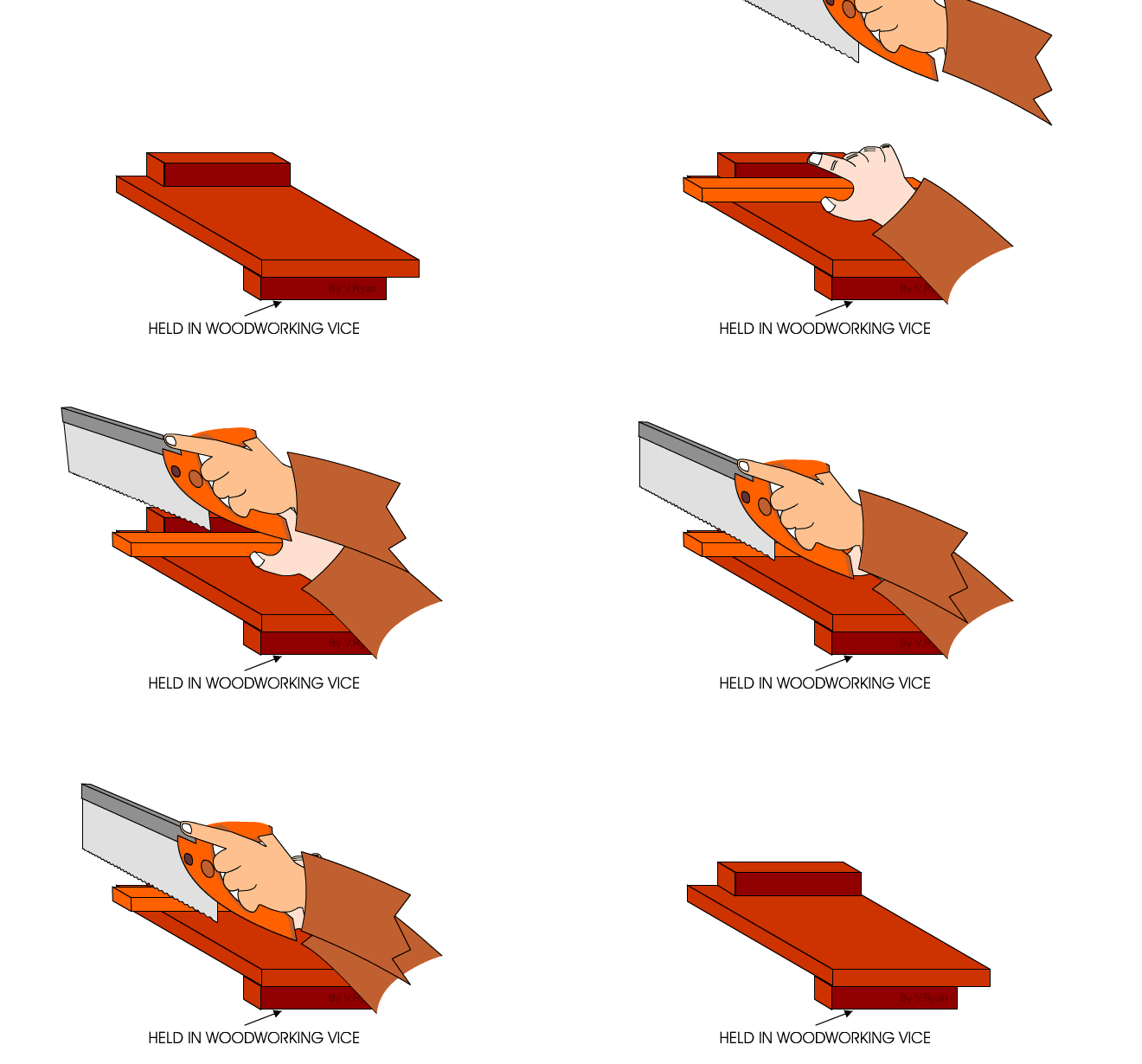
2. When sawing a piece of wood, it is usually placed on a bench hook.
The wood is held in position by the left hand whilst the right hand
guides the saw so that the saw groove is straight (for left handed
people - the other way round) |
| |
 |
| |
| Concentration is very important. The saw must always
be held straight and the first few cuts with the saw must be made
slowly. Once an initial groove has been cut sawing should be easier.
However, slow down the cutting motion when the wood is almost sawn
through - this will prevent the wood splitting as the saw finally cuts
the wood into two pieces. |
| |
|
|
| |
| HOLDING A SAW IN THE STYLE OF A GENTS SAW |
| |
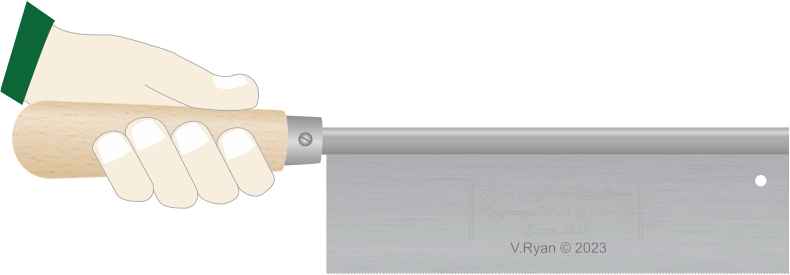
This is another style of Dovetail Saw. It has a high quality steel blade, 203mm / 8inch Dovetail in length, with ‘fine’ teeth.18 TPI (teeth per inch).
An ideal saw for cutting dovetails, tenons, woodworking joints. |
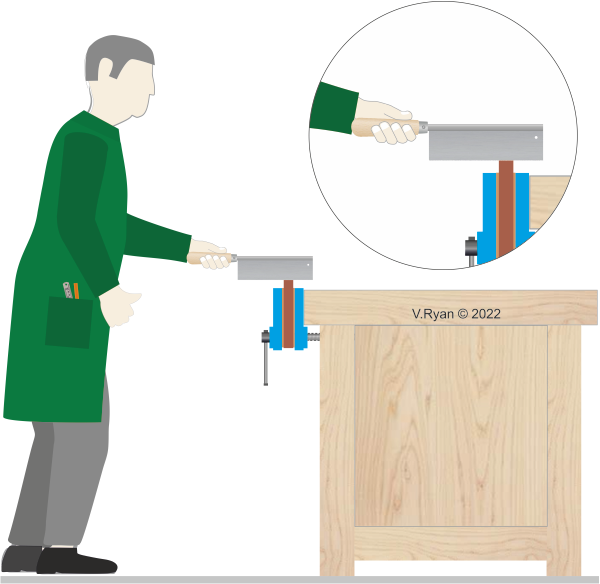
| This style of saw is sometimes called a Gents saw (or right angled tenon saw). Generally, it has a longer blade than a traditional dovetail saw. The handle is straight, it little like a file handle. |
 |
| |
 |
| |
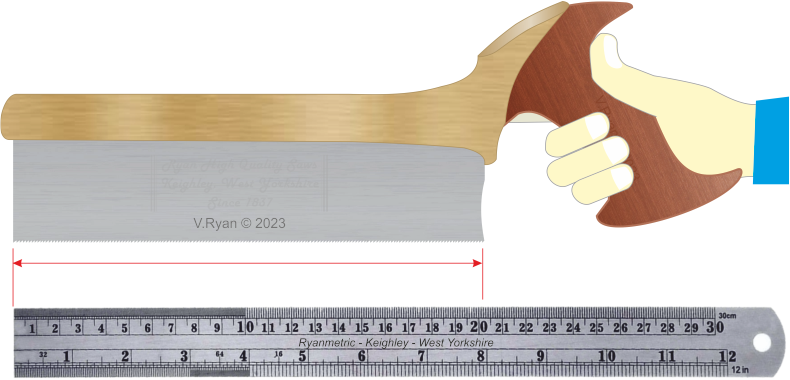
| Another alternative style of Dovetail saw, with an ergonomic handle. |
| |
 |
| |
| |
QUESTIONS:
1. Draw a tenon
saw labelling the parts. Describe how the saw is held in the hand.
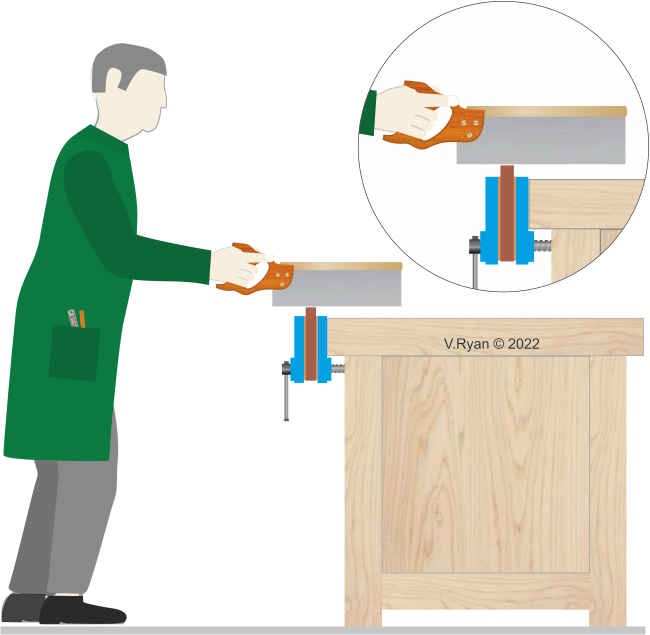
2. Try sawing a piece of scrap wood using a bench hook and tenon saw as
shown in the animation. There is something wrong with the way the saw is
held and its position. What is it? |
| |
| CLICK HERE TO GO TO
EQUIPMENT AND PROCESSES INDEX |
| |
| |
| |
| |