| CLICK HERE FOR INDEX PAGE | ||||||||||
| EXAMPLE QUESTIONS AND ANSWERS (4) | ||||||||||
| V. Ryan © 2001 | ||||||||||
| PDF FILE - CLICK HERE FOR PRINTABLE WORKSHEET | ||||||||||
|
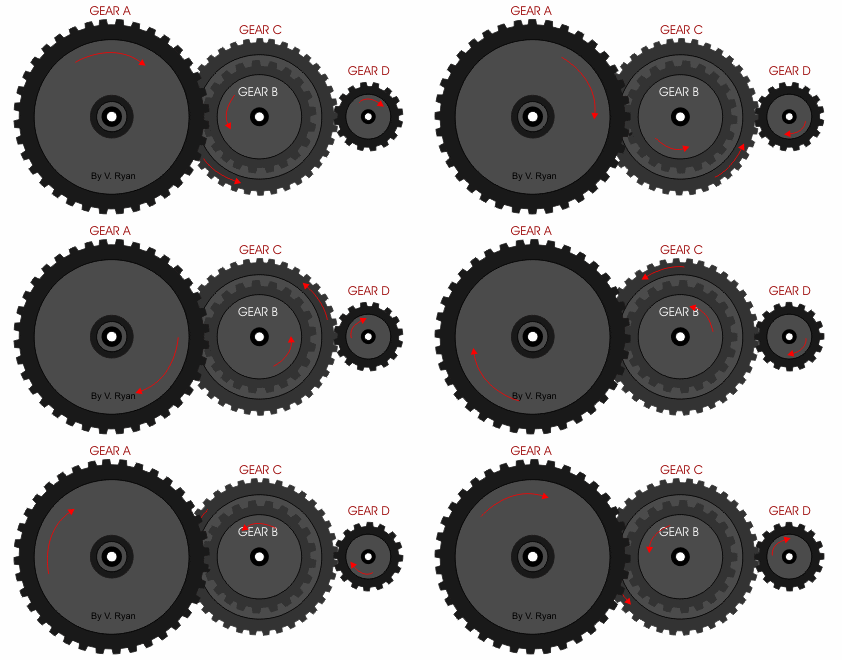
Below is a question regarding 'compound gears'. Gears C and B represent a compound gear as they appear 'fixed' together. When drawn with a compass they have the same centre. Two gears 'fixed' together in this way rotate together and at the same RPM. When answering a question like this split it into two parts. Treat gears A and B as one question AND C and D as the second part. |
||||||||||
|
|
||||||||||
|
This is an example of a “compound gear train”. Gear A rotates in a clockwise direction at 30 revs/min. What is the output in revs/min at D and what is the direction of rotation ? |
||||||||||
|
||||||||||
|
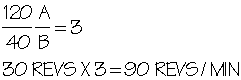
First find revs/min at B;
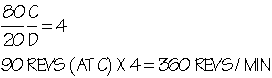
B is smaller therefore it rotates faster and revs/min increase. C is fixed to B and therefore, rotates at the same speed. 90 REVS/MIN at C Next find revs/min at D
D is smaller than C, therefore rotates faster (increased revs/min). A revolves in a clockwise direction, B is therefore anti-clockwise, C is fixed to B and is also anti-clockwise, which means D revolves in a clockwise direction. |
||||||||||
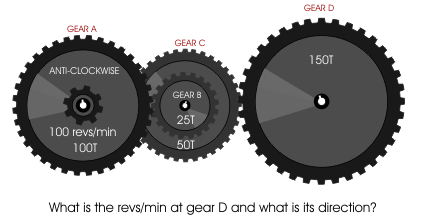
| Try the following question: | ||||||||||
|
|
||||||||||
|
||||||||||