|
|
WORM GEARS V. Ryan © 2002 |
|
![]() |
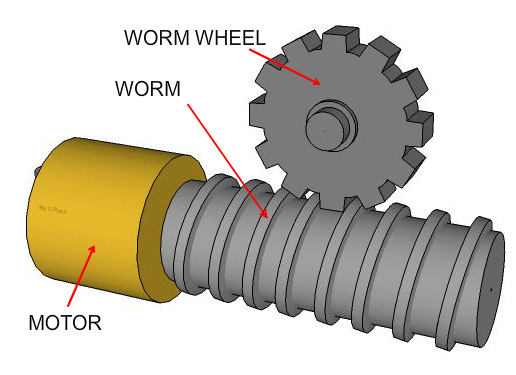
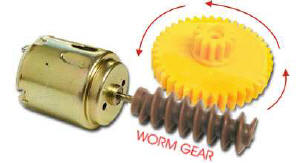
The arrangement of gears seen left is called a worm and wormwheel. The worm, which in this example is brown in colour, only has one tooth but it is like a screw thread. The wormwheel, coloured yellow, is like a normal gear wheel or spur gear. The worm always drives the worm wheel round, it is never the opposite way round as the system tends to lock and jam. |
|
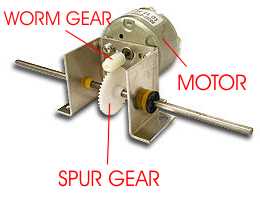
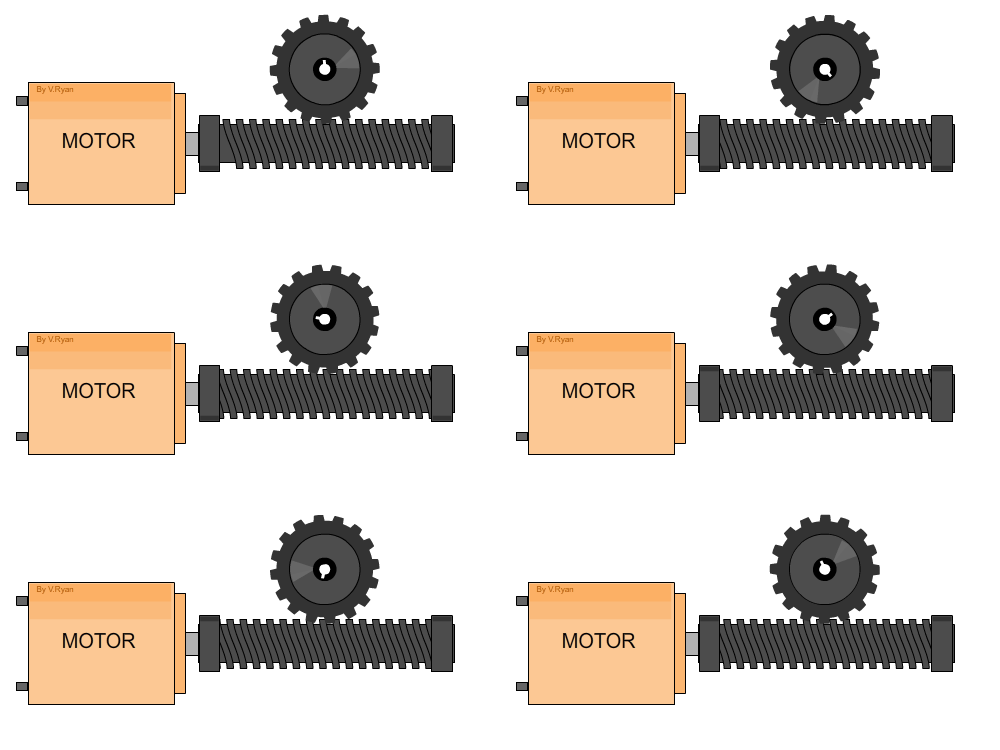
The picture to the right is a typical set-up for a motor and worm gear system. As the worm revolves the wormwheel (spur gear) also revolves but the rotary motion is transmitted through a ninety degree angle. |
|
|
|
|
|
The gear ratio of a worm gear is worked out through the following formula: number of teeth on wormwheel number of teeth on worm
The worm acts as a single toothed gear so the ratio is;
number of teeth on wormwheel 1 |
|
|
EXAMPLE: If the wormwheel has 60 teeth: 60 1
Gear Ratio = 60:1 (Rotary velocity is also reduced by 60:1) |
|
|
Quite simply, this means a worm gear reduces the speed of the spur gear by sixty times. If you need a gear system whereby the speed is reduced by a considerable amount - a worm and wormwheel are worth considering. |
|
|
1. Describe how a worm and wormwheel could be used as part of a design for a mechanical device or toy. Use diagrams and notes. 2. If the wormwheel has 80 teeth, what is the gear ratio ? |
|
|
|
|