| CLICK HERE FOR INDEX PAGE | |
| YEW TREE | |
| V. Ryan © 2008 | |
| This is a very attractive softwood. When using solid
Yewtree, live knots, heart shake, ingrown bark, white calcium deposits,
even holes and dead knots should all be accepted as part of the growth
characteristics and used as an attractive feature of this timber. Taxus baccata Family: Taxaceae Commercial Names: Common Yew, European Yew. Distribution: Scandinavia, Europe, UK. Russia, Asia Minor, N. Africa, Burma and the Himalayas. |
|
 |
|
|
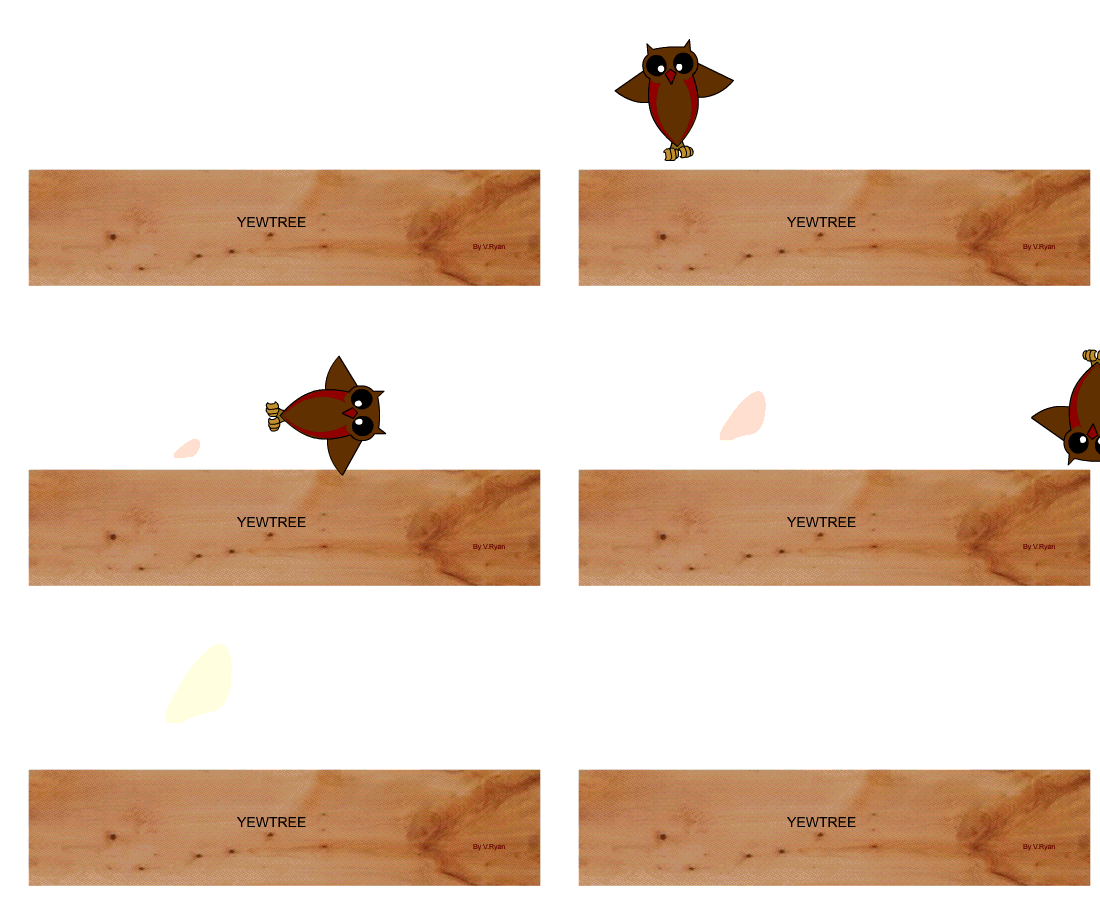
General Description: The heartwood colour is
golden orange-brown streaked with dark purple, mauve and brown patches
with veins, tiny knots and clusters of in-growing bark. The grain is
straight, but sometimes curly and irregular, it has a distinctive white to
cream sapwood, giving an attractive contrast to the heartwood. The texture
is medium. Weight is about 670 kg/m3 (42lb/ft3); specific gravity 0.67. |
|
| CLICK HERE FOR NATURAL WOODS IN DETAIL | |
| CLICK HERE FOR RESISTANT MATERIALS INDEX PAGE | |